






Product Overview
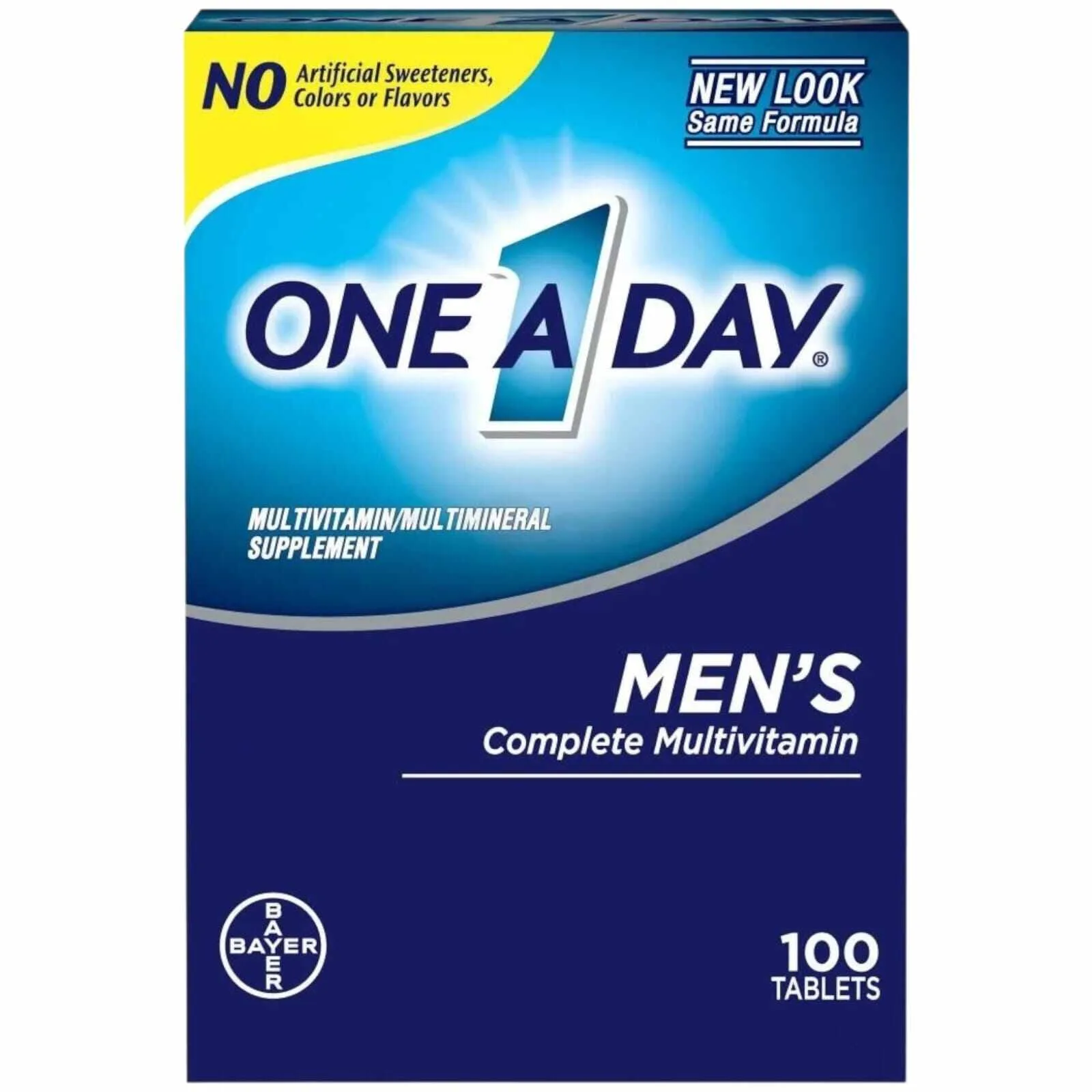
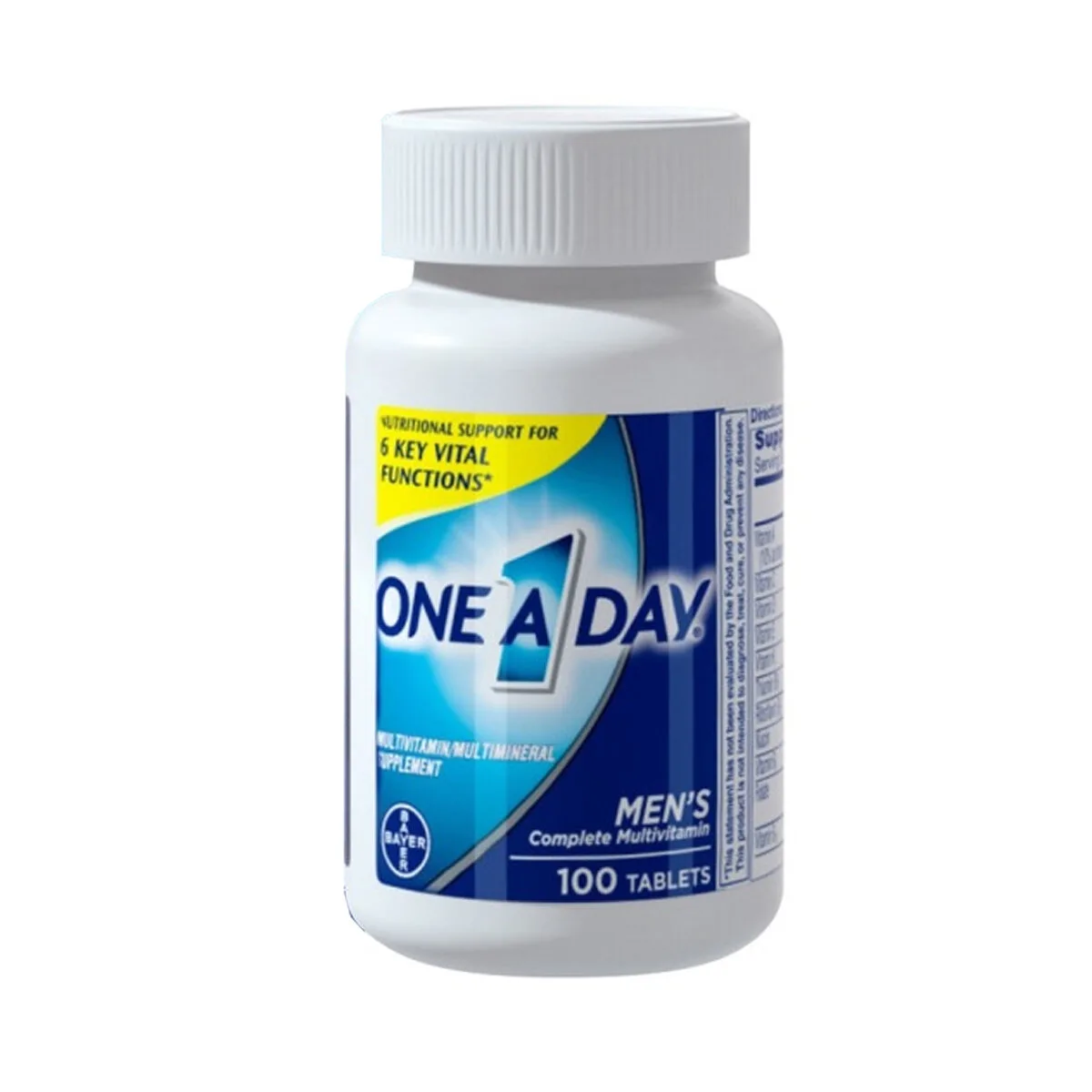
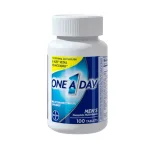
One A Day Men’s is a once-daily multivitamin and multimineral for adult men from Bayer’s One A Day range, in a box of 100 tablets — just over three months at one a day. The seller calls it the “Men’s Health Formula”; the box in the photos reads “Men’s Complete Multivitamin”.
The listing states it is free of gluten, wheat, dairy, artificial colours and artificial sweeteners, and the box adds no artificial flavours. It contains no iron, which suits most men — men rarely need extra iron, and too much builds up in the body.
Two Versions of the Label
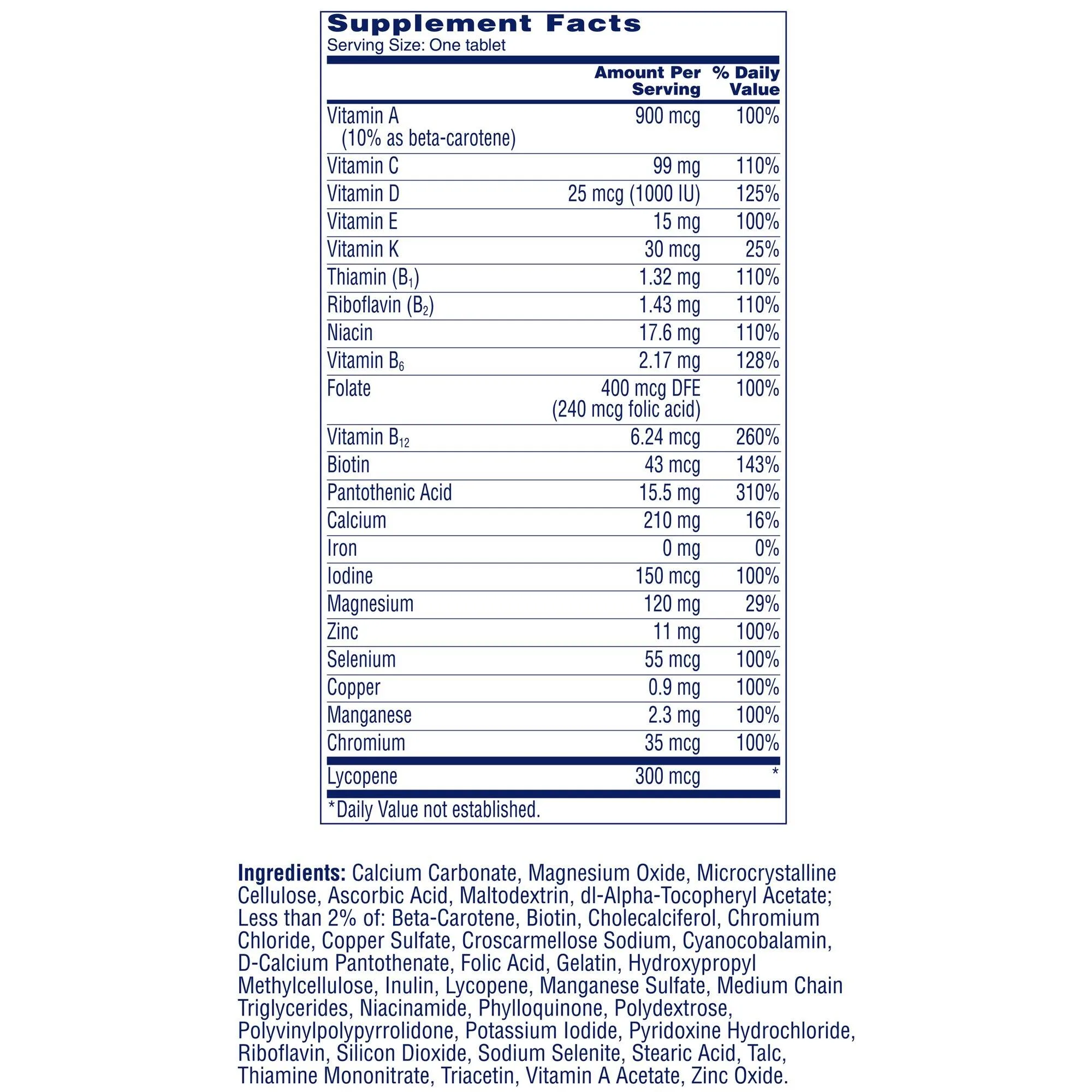
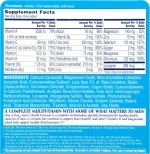
The photos show two different supplement facts panels. The listing itself says you may see an original and a new label — but these are not just different layouts. Several amounts differ, and the newer one adds iodine and lists gelatin. Both are one tablet a day, and both contain no iron.
- Vitamin D: 700 IU (older) / 1,000 IU (newer)
- Zinc: 15 mg / 11 mg
- Selenium: 110 mcg / 55 mcg
- Copper: 2 mg / 0.9 mg
- Chromium: 120 mcg / 35 mcg
- Vitamin B12: 18 mcg / 6.24 mcg
- Iodine: none / 150 mcg
- Gelatin: not listed / listed in the ingredients
The ingredient list in the seller’s description matches the older label. We will not guess which version is in the box. Message us before ordering and we will read the panel on the pack we hold — it matters if you avoid gelatin, have a thyroid condition (iodine), or take other supplements with zinc or selenium.
Ingredients / Specifications
Per tablet, older label (from the product photo): vitamin A 3,500 IU (14% as beta-carotene), vitamin C 60 mg, vitamin D3 700 IU, vitamin E 22.5 IU, vitamin K 20 mcg, thiamin 1.35 mg, riboflavin 1.7 mg, niacin 18 mg, vitamin B6 3 mg, folic acid 400 mcg, vitamin B12 18 mcg, biotin 75 mcg, pantothenic acid 16 mg, calcium 210 mg, magnesium 140 mg, zinc 15 mg, selenium 110 mcg, copper 2 mg, manganese 2 mg, chromium 120 mcg, lycopene 300 mcg. Iron 0 mg.
Other ingredients (older label): calcium carbonate, magnesium oxide, microcrystalline cellulose, ascorbic acid, croscarmellose sodium; less than 2% of beta-carotene, biotin, cholecalciferol, chromium chloride, crospovidone, cupric oxide, cyanocobalamin, D-calcium pantothenate, dl-alpha-tocopheryl acetate, folic acid, hydroxypropyl methylcellulose, lycopene, manganese sulfate, niacinamide, phytonadione, pyridoxine hydrochloride, riboflavin, silicon dioxide, sodium selenite, stearic acid, thiamine mononitrate, triacetin, vitamin A acetate, zinc oxide.
Per tablet, newer label (from the product photo): vitamin A 900 mcg (10% as beta-carotene), vitamin C 99 mg, vitamin D 1,000 IU (25 mcg), vitamin E 15 mg, vitamin K 30 mcg, thiamin 1.32 mg, riboflavin 1.43 mg, niacin 17.6 mg, vitamin B6 2.17 mg, folate 400 mcg DFE (240 mcg folic acid), vitamin B12 6.24 mcg, biotin 43 mcg, pantothenic acid 15.5 mg, calcium 210 mg, iodine 150 mcg, magnesium 120 mg, zinc 11 mg, selenium 55 mcg, copper 0.9 mg, manganese 2.3 mg, chromium 35 mcg, lycopene 300 mcg. Iron 0 mg. Its ingredient list includes gelatin, maltodextrin, inulin and potassium iodide.
Key Benefits
- Fills common gaps — a broad spread of vitamins and minerals at around the daily requirement, useful for men whose diet is limited or irregular.
- Vitamin D — helps absorb calcium for normal bones and muscles; low vitamin D is common in Bangladesh.
- B vitamins — help release energy from food (“convert food to fuel”, as the label puts it).
- Zinc, selenium and vitamins C and D — contribute to the normal function of the immune system.
- Magnesium — contributes to normal muscle function.
What the Label Claims, and What Is Known
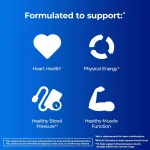
- “Heart health” and “healthy blood pressure” — the box’s own footnotes say the blood pressure claim refers to levels “already within the normal range”, and that the product is “not a replacement for heart medications”. In large trials, men who took a daily multivitamin for years did not have fewer heart attacks or strokes. If you have high blood pressure or heart disease, keep taking what your doctor prescribed.
- “Physical energy” — B vitamins release energy from food; they add energy only if you were short of them.
- Lycopene — 300 mcg is a small amount, much less than a serving of cooked tomatoes provides.
Key Features
- Multivitamin and multimineral for adult men — one tablet a day
- 100 tablets
- No iron
- No artificial colours, flavours or sweeteners; gluten, wheat and dairy free (as stated)
How to Use
- Adult men: take one tablet daily, with food.
- Do not add another multivitamin. If you also take vitamin D, zinc, selenium or a B complex separately, add up the totals.
Who Is It Suitable For?
- Adult men who want a broad daily top-up.
- Not for anyone under 18, or during pregnancy or breastfeeding — the listing’s warning says do not use.
- Warfarin — it contains vitamin K (20 or 30 mcg, depending on the version). See below.
- Thyroid conditions — the newer version contains iodine. Ask your doctor.
- Vegetarians — the newer version lists gelatin. Message us to check which version we hold.
- If you have a medical condition or take prescription medicine, the listing advises consulting a healthcare professional first.
Why Choose One A Day Men’s?
A familiar, widely sold US multivitamin from Bayer, at sensible everyday amounts rather than megadoses, with no iron and one tablet a day. For a man who wants a simple nutritional safety net it does the job — once you have checked which label version you are getting.
Important — Vitamin K and Blood Thinners
If you take warfarin, do not take this without speaking to your doctor.
Warfarin works by blocking vitamin K. Taking a vitamin K supplement works directly against it and can push your INR out of range, which is dangerous in either direction — too little effect risks a clot, too much risks a bleed.
This is not a reason to avoid vitamin K forever; some people on warfarin do take a steady small amount under supervision. It is a reason that the decision belongs to the doctor managing your INR, not to a shop page.
Do Not Exceed the Stated Dose
Follow the dose printed on the pack. More is not better with supplements — for several of them, more is worse.
- Fat-soluble vitamins (A, D, E and K) build up in the body rather than being flushed out. A high daily dose taken for months can accumulate to a harmful level.
- Taking two products that both contain the same vitamin is an easy way to double a dose without noticing. Check every label you are taking.
- Stop and see a doctor if you get nausea, stomach pain, unusual bruising, a rash, or anything else new after starting.
This Is a Supplement, Not a Medicine
A dietary supplement is a food product. It is not a medicine, it has not been through the testing a medicine goes through, and it does not diagnose, treat, cure or prevent any disease.
Supplement labels use health language — “supports”, “helps maintain”, “promotes” — precisely because they are not permitted to claim treatment. Read them that way. If a listing anywhere promises that a capsule will fix a medical condition, that promise is not one the product can keep.
What a supplement can honestly do is fill a gap in your diet. That is worth something, and it is a smaller thing than most packaging implies.
Talk to a Doctor First
Speak to a doctor or pharmacist before you start, particularly if you:
- take any prescribed medicine — supplements interfere with medicines more often than people expect
- are being treated for a heart, liver, kidney, thyroid or blood condition
- have diabetes
- are pregnant, trying to conceive, or breastfeeding
- have surgery or a dental procedure coming up
Never stop or reduce a prescribed medicine in order to take a supplement instead. That is the single most dangerous thing anyone does with a product like this, and it is what the marketing language quietly invites.
About the Imported Pack
This is an imported product. The label, the dose instructions and the ingredient panel are the ones printed for the market it was made for, and the wording may differ from a locally packaged version.
Follow the dose printed on the pack itself — it is the authority on its own contents — and check the expiry date when it arrives. If anything on the label is unclear, message us before you take it and we will read it to you.
Storage
- Keep the container tightly closed, somewhere cool and dry, out of direct sunlight.
- Do not store it in a bathroom. Heat and humidity break supplements down faster than anything else, and a Dhaka bathroom is the worst place in the house for them.
- Leave the desiccant sachet in the bottle. It is there to keep moisture out, not by mistake.
- Softgels and fish oils are best kept in a fridge in hot weather — they go rancid otherwise.
- Keep it out of reach of children.
- Do not use it after the expiry date, and throw it away if the capsules smell strongly off, have stuck together or changed colour.
Frequently Asked Questions
Which version will I get?
The photos show two labels with different amounts. Message us before ordering and we will read the panel on the box we hold.
Why is there no iron?
Most men get enough iron from food, and extra iron builds up in the body. Men’s multivitamins usually leave it out for that reason.
Can I take it with my blood pressure medicine?
Usually yes, but ask your pharmacist. Do not cut down your medicine because the label mentions blood pressure — this is not a blood pressure treatment.
Can I take it with my other supplements?
Check the labels for anything that appears in both — doubling a dose by accident is easy. If you are on prescribed medicine as well, ask a pharmacist. They do this check quickly and for free.
How do I check the pack is in date?
The expiry date is printed on the bottle or the base of the box. Check it as soon as your order arrives. If it is unreadable or close to expiry, message us and we will replace it.








Reviews
There are no reviews yet.