
Product Overview
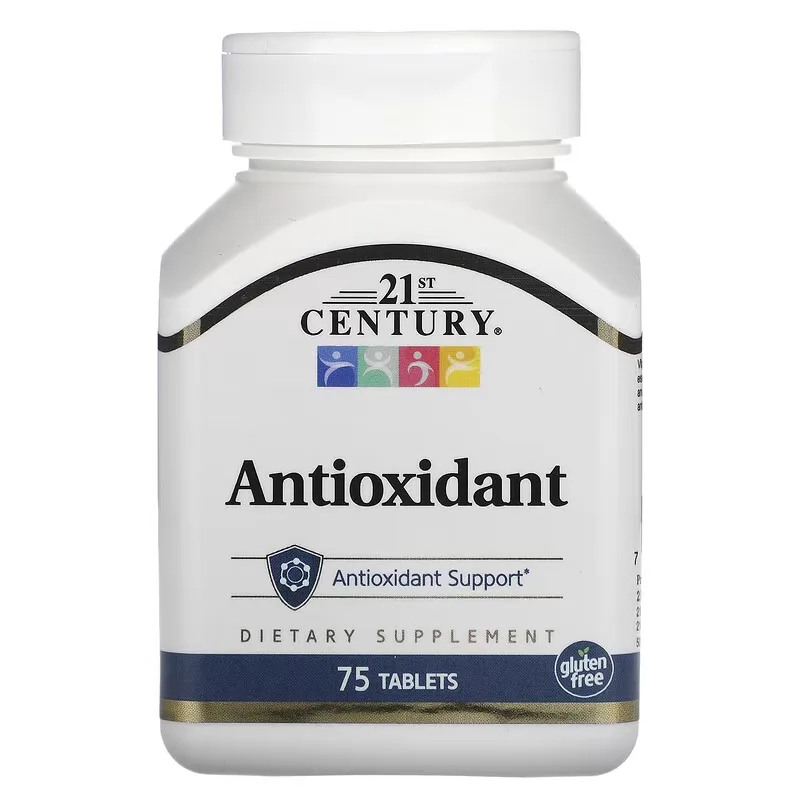
21st Century Antioxidant combines the antioxidant vitamins A (as beta-carotene), C and E with the minerals zinc, selenium, copper and manganese, plus a little calcium, in a single tablet. The bottle holds 75 tablets. The serving on the label is one tablet, so it lasts 75 days at one a day.
The listing calls it “Ace Antioxidant”; the bottle in the photos reads simply “Antioxidant”. The amounts on this page are from the supplement facts panel in the photos.
Key Benefits
- Vitamins C and E and selenium contribute to protecting cells from oxidative damage.
- Vitamin A, zinc and selenium contribute to normal immune function, and vitamin A to normal vision.
- Vitamin C is needed for normal collagen formation and helps the body absorb iron from plant foods.
- Copper and manganese are trace minerals that the body’s own antioxidant enzymes need in order to work.
What the Listing Claims, and What Is Known
The Bengali description promises a lot. The research on antioxidant supplements is unusually clear, so here it is plainly:
- Cancer: large trials of beta-carotene, vitamin E and vitamin C supplements did not lower cancer rates. In two of them, high-dose beta-carotene increased lung cancer in smokers.
- Heart attack and stroke: large trials of vitamin E and vitamin C found no reduction in heart attacks or strokes.
- Memory, Alzheimer’s and dementia: antioxidant supplements have not been shown to protect against them.
- Eyes: one specific high-dose formula, from the AREDS trials, slowed the worsening of a particular eye disease, age-related macular degeneration. This product is not that formula and does not have those doses. If an eye doctor has recommended an eye vitamin, ask them which one.
- Immunity, skin, wrinkles and detox: these vitamins support normal function when you are short of them. They do not raise your defences beyond normal or remove wrinkles, and your liver and kidneys clear waste on their own.
The honest summary: antioxidants from fruit, vegetables, nuts and dal are linked to better health. The same nutrients in a tablet have mostly not repeated that in trials. This product is a reasonable safety net, not a shield.
Key Features
- Vitamins A (100% as beta-carotene), C and E
- Zinc, selenium, copper, manganese and calcium
- One tablet per serving; 75 tablets
- Gluten-free (as labelled)
Ingredients / Specifications
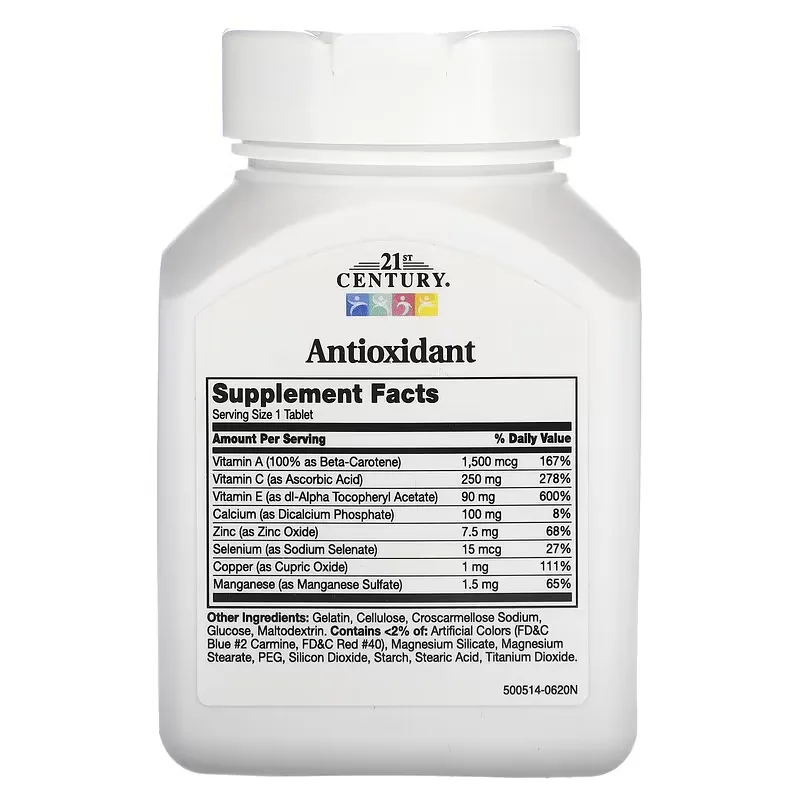
Per tablet (supplement facts panel in the photos):
- Vitamin A (100% as beta-carotene) 1,500mcg, 167% DV
- Vitamin C (as ascorbic acid) 250mg, 278% DV
- Vitamin E (as dl-alpha tocopheryl acetate) 90mg, 600% DV
- Calcium (as dicalcium phosphate) 100mg, 8% DV
- Zinc (as zinc oxide) 7.5mg, 68% DV
- Selenium (as sodium selenate) 15mcg, 27% DV
- Copper (as cupric oxide) 1mg, 111% DV
- Manganese (as manganese sulfate) 1.5mg, 65% DV
Other ingredients: gelatin, cellulose, croscarmellose sodium, glucose, maltodextrin. Contains less than 2% of: artificial colours (FD&C Blue #2, carmine, FD&C Red #40), magnesium silicate, magnesium stearate, PEG, silicon dioxide, starch, stearic acid, titanium dioxide.
Not vegetarian: it contains gelatin, and carmine, a red colour made from insects. The vitamin E is the synthetic form (dl-alpha).
How to Use
- The serving on the label is one tablet. The directions panel is not shown in the photos, so follow the bottle.
- Take it with a meal. Vitamins A and E are fat-soluble and absorb better with food.
- Do not take it with a multivitamin without adding up the vitamins A and E, zinc and selenium in both.
Who Is It Suitable For?
Adults whose diet is short of fruit, vegetables, nuts and seeds, and who want a simple antioxidant vitamin and mineral tablet.
- Smokers and former heavy smokers: the trials that found more lung cancer used higher doses of beta-carotene than this tablet holds. Even so, the usual advice is to avoid beta-carotene supplements unless your doctor agrees.
- Blood thinners: 90mg of vitamin E is a supplement-level dose, and high-dose vitamin E has a mild blood-thinning effect. Ask your doctor if you take warfarin, aspirin or clopidogrel.
- Pregnancy: the vitamin A here is beta-carotene, which the body converts only as it needs, so it does not carry the birth-defect risk of high-dose preformed vitamin A. Even so, in pregnancy use a supplement chosen with your doctor instead of this one.
- Not for vegetarians: gelatin and carmine.
- Not for children.
Why Choose 21st Century Antioxidant?
A low-cost, one-a-day combination with every amount printed on the label, mostly at moderate doses. Vitamin E is the exception, at six times the daily value. It is a reasonable top-up for a limited diet.
Food First
A supplement is a supplement — the name is accurate. It works best filling a genuine gap on top of an ordinary varied diet, not standing in for one.
Whole food gives you the nutrient along with the fibre and the dozens of other compounds that come with it, in amounts your body is built to handle. No capsule reproduces that. Take a supplement because your diet, your blood test or your doctor points to a specific gap — not because the packaging is persuasive.
Do Not Exceed the Stated Dose
Follow the dose printed on the pack. More is not better with supplements — for several of them, more is worse.
- Fat-soluble vitamins (A, D, E and K) build up in the body rather than being flushed out. A high daily dose taken for months can accumulate to a harmful level.
- Taking two products that both contain the same vitamin is an easy way to double a dose without noticing. Check every label you are taking.
- Stop and see a doctor if you get nausea, stomach pain, unusual bruising, a rash, or anything else new after starting.
This Is a Supplement, Not a Medicine
A dietary supplement is a food product. It is not a medicine, it has not been through the testing a medicine goes through, and it does not diagnose, treat, cure or prevent any disease.
Supplement labels use health language — “supports”, “helps maintain”, “promotes” — precisely because they are not permitted to claim treatment. Read them that way. If a listing anywhere promises that a capsule will fix a medical condition, that promise is not one the product can keep.
What a supplement can honestly do is fill a gap in your diet. That is worth something, and it is a smaller thing than most packaging implies.
Talk to a Doctor First
Speak to a doctor or pharmacist before you start, particularly if you:
- take any prescribed medicine — supplements interfere with medicines more often than people expect
- are being treated for a heart, liver, kidney, thyroid or blood condition
- have diabetes
- are pregnant, trying to conceive, or breastfeeding
- have surgery or a dental procedure coming up
Never stop or reduce a prescribed medicine in order to take a supplement instead. That is the single most dangerous thing anyone does with a product like this, and it is what the marketing language quietly invites.
Storage
- Keep the container tightly closed, somewhere cool and dry, out of direct sunlight.
- Do not store it in a bathroom. Heat and humidity break supplements down faster than anything else, and a Dhaka bathroom is the worst place in the house for them.
- Leave the desiccant sachet in the bottle. It is there to keep moisture out, not by mistake.
- Softgels and fish oils are best kept in a fridge in hot weather — they go rancid otherwise.
- Keep it out of reach of children.
- Do not use it after the expiry date, and throw it away if the capsules smell strongly off, have stuck together or changed colour.
Frequently Asked Questions
Is this the same as “Ace Antioxidant”?
The listing uses that name; the bottle in the photos says “Antioxidant”. ACE stands for vitamins A, C and E, and this bottle contains all three. Message us if you want us to check the bottle we hold.
Does it protect against cancer or heart disease?
No. Large trials of antioxidant vitamin supplements did not reduce cancer, heart attacks or strokes. Fruit and vegetables in your diet are the better-supported route.
Is it vegetarian?
No. It contains gelatin and carmine, a colour made from insects.
Can I take it with my other supplements?
Check the labels for anything that appears in both — doubling a dose by accident is easy. If you are on prescribed medicine as well, ask a pharmacist. They do this check quickly and for free.
How do I check the pack is in date?
The expiry date is printed on the bottle or the base of the box. Check it as soon as your order arrives. If it is unreadable or close to expiry, message us and we will replace it.






Reviews
There are no reviews yet.