





Product Overview
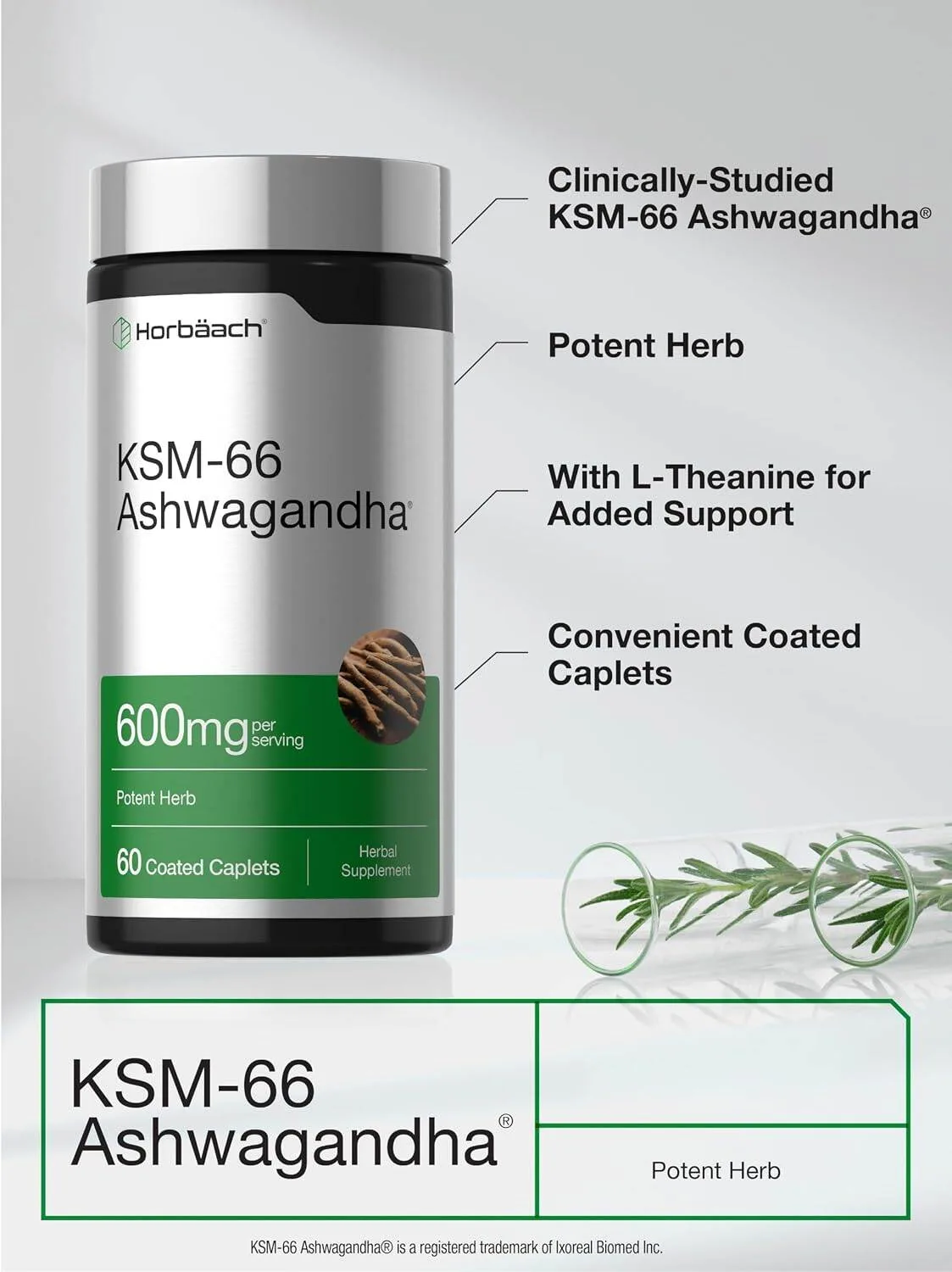
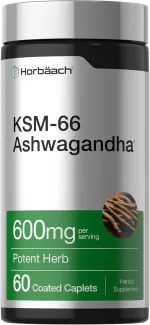
Horbaach KSM-66 Ashwagandha combines two ingredients taken for everyday stress: KSM-66 ashwagandha, a branded full-spectrum extract of the ashwagandha root (Withania somnifera), and L-theanine, an amino acid found naturally in tea.
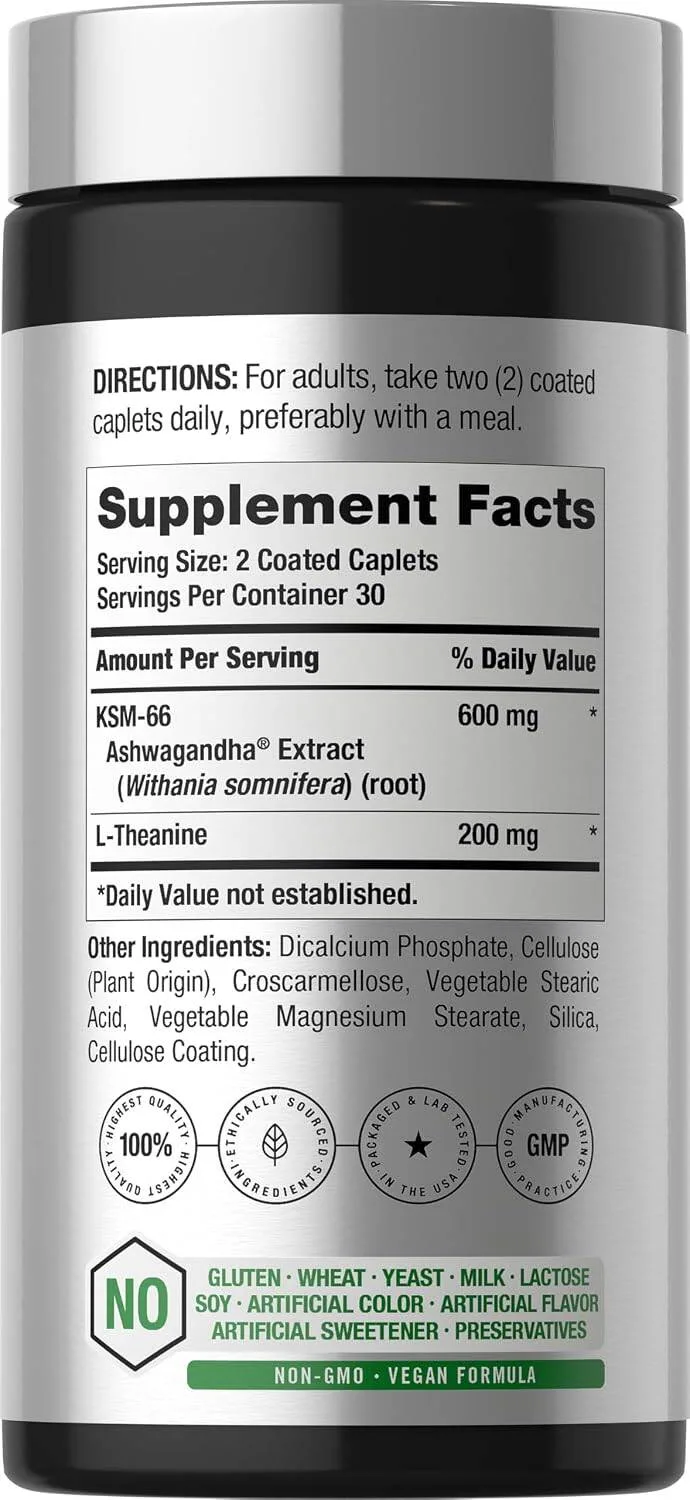
The bottle holds 60 coated caplets. According to the label in the product photos, a serving is two caplets, giving 600mg of KSM-66 ashwagandha and 200mg of L-theanine — 30 servings, so a one-month supply. The coating makes the caplets easier to swallow and gentler on the stomach. It is manufactured in the United States.
Key Benefits
- Ashwagandha for everyday stress — its best-supported use. Several small randomised trials, many of them using KSM-66 at 600mg a day, report lower stress scores and lower cortisol after about eight weeks. The effect is modest, and real.
- Sleep — some of the same trials report a small improvement in sleep quality.
- L-theanine — small studies suggest it promotes a calm, relaxed alertness without making most people drowsy.
- Energy and mood — the seller mentions both. The evidence here is thinner; do not expect a noticeable lift.
Key Features
- KSM-66 ashwagandha root extract, 600mg per serving
- With 200mg L-theanine per serving
- Coated caplets
- Vegan formula and non-GMO, as stated on the label
- Made in the USA
Ingredients / Specifications
Per two-caplet serving (label in the product photos): KSM-66 ashwagandha extract (Withania somnifera, root) 600mg; L-theanine 200mg.
Other ingredients: dicalcium phosphate, cellulose, croscarmellose, vegetable stearic acid, vegetable magnesium stearate, silica, cellulose coating. The label states no gluten, wheat, yeast, milk, lactose, soy, artificial colours, flavours, sweeteners or preservatives.
How to Use
- Adults: take two caplets a day, preferably with a meal, as the label directs.
- Do not take more than two caplets a day, and do not combine it with another ashwagandha product.
- Give it six to eight weeks — that is how long the trials ran.
- Ashwagandha makes some people drowsy. Be careful driving until you know how it affects you.
Who Should Not Take It
- Pregnancy, breastfeeding and under-18s — do not use. This is the maker’s own warning, and ashwagandha has traditionally been considered unsafe in pregnancy.
- Thyroid conditions — ashwagandha can raise thyroid hormone levels. Do not take it with thyroid medicine, or with an overactive thyroid, without your doctor.
- Liver — there are rare reports of liver injury linked to ashwagandha. Stop and see a doctor if you notice yellow eyes or skin, dark urine or unusual tiredness.
- Medicines — it may add to the effect of sedatives and sleeping tablets, and of diabetes or blood pressure medicine. Ask first.
- Autoimmune conditions, and anyone with surgery coming up.
Who Is It Suitable For?
Healthy adults dealing with ordinary, day-to-day stress who want to try a well-studied ashwagandha extract, and who have checked it against any medicine they take.
It is not a substitute for care if you have an anxiety disorder, panic attacks, depression or long-term insomnia. Those respond to proper help, and a doctor is the place to start.
Why Choose Horbaach KSM-66 Ashwagandha?
KSM-66 is the ashwagandha extract used in many of the published trials, and the 600mg daily amount here matches what was studied. The label is clear about amounts, and the vegan coated caplet is easy to take.
What the Evidence Actually Says
Herbal supplements sit in an awkward place: some have real, measured effects, many have small ones, and a few have none beyond what people expect from taking them. The marketing rarely distinguishes between the three.
“Natural” does not mean “safe” or “gentle”. Plants make powerful compounds — that is why so many medicines came from them in the first place — and a herb strong enough to have an effect is strong enough to interact with a medicine. Herbal products are also less tightly regulated than medicines, so what is in the bottle varies more between brands than it does for a pharmaceutical.
Symptoms Need a Doctor, Not a Capsule
If you have symptoms — pain, a change in how your body is working, something that has been getting worse — the useful thing to do is get it looked at. A supplement bought because a listing named your symptom delays that, and delay is the part that causes harm.
Take this if you and a doctor have decided it is a sensible addition. Do not take it as a way of avoiding the appointment.
This Is a Supplement, Not a Medicine
A dietary supplement is a food product. It is not a medicine, it has not been through the testing a medicine goes through, and it does not diagnose, treat, cure or prevent any disease.
Supplement labels use health language — “supports”, “helps maintain”, “promotes” — precisely because they are not permitted to claim treatment. Read them that way. If a listing anywhere promises that a capsule will fix a medical condition, that promise is not one the product can keep.
What a supplement can honestly do is fill a gap in your diet. That is worth something, and it is a smaller thing than most packaging implies.
Talk to a Doctor First
Speak to a doctor or pharmacist before you start, particularly if you:
- take any prescribed medicine — supplements interfere with medicines more often than people expect
- are being treated for a heart, liver, kidney, thyroid or blood condition
- have diabetes
- are pregnant, trying to conceive, or breastfeeding
- have surgery or a dental procedure coming up
Never stop or reduce a prescribed medicine in order to take a supplement instead. That is the single most dangerous thing anyone does with a product like this, and it is what the marketing language quietly invites.
About the Imported Pack
This is an imported product. The label, the dose instructions and the ingredient panel are the ones printed for the market it was made for, and the wording may differ from a locally packaged version.
Follow the dose printed on the pack itself — it is the authority on its own contents — and check the expiry date when it arrives. If anything on the label is unclear, message us before you take it and we will read it to you.
Storage
- Keep the container tightly closed, somewhere cool and dry, out of direct sunlight.
- Do not store it in a bathroom. Heat and humidity break supplements down faster than anything else, and a Dhaka bathroom is the worst place in the house for them.
- Leave the desiccant sachet in the bottle. It is there to keep moisture out, not by mistake.
- Softgels and fish oils are best kept in a fridge in hot weather — they go rancid otherwise.
- Keep it out of reach of children.
- Do not use it after the expiry date, and throw it away if the capsules smell strongly off, have stuck together or changed colour.
Frequently Asked Questions
Will it make me sleepy?
L-theanine usually does not. Ashwagandha makes some people drowsy, so take the first few doses on a day when you do not need to drive.
Can I take it with another ashwagandha product?
No. Check your other supplements — ashwagandha turns up in many stress and sleep blends, and the doses add up.
What is KSM-66?
A branded ashwagandha extract made from the root of the plant. It is the extract used in many of the clinical studies on ashwagandha.
How long before I notice anything?
Honestly: with most supplements, you do not notice anything, because filling a nutritional gap feels like nothing. Where there is a measurable effect it usually takes weeks to months. Be sceptical of anything you feel within a day or two.
Is this the genuine imported product?
Yes. It is sourced as an import, so the bottle is printed for its origin market rather than for Bangladesh. The seal should be intact when it reaches you — tell us straight away if it is not.










Reviews
There are no reviews yet.