




Product Overview
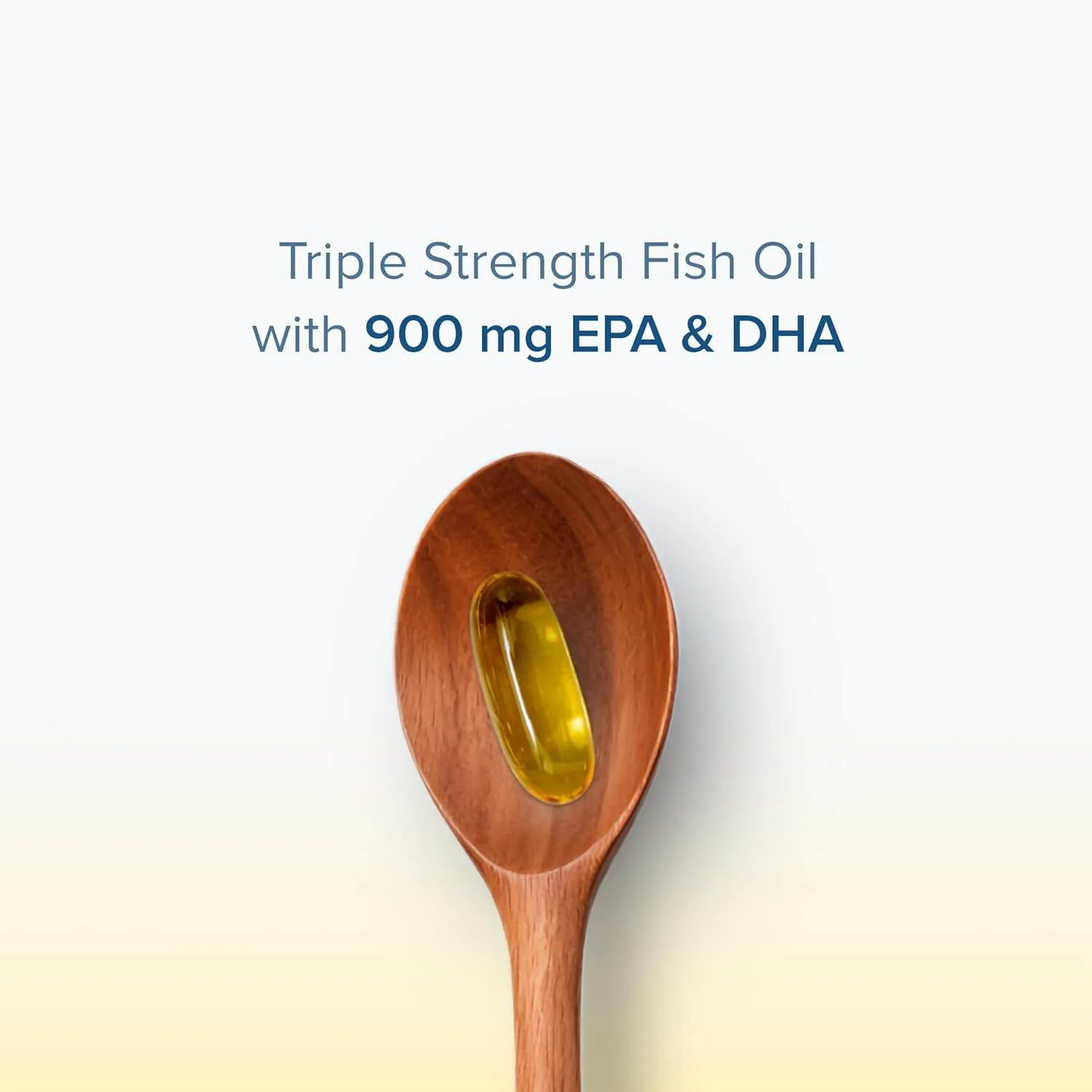
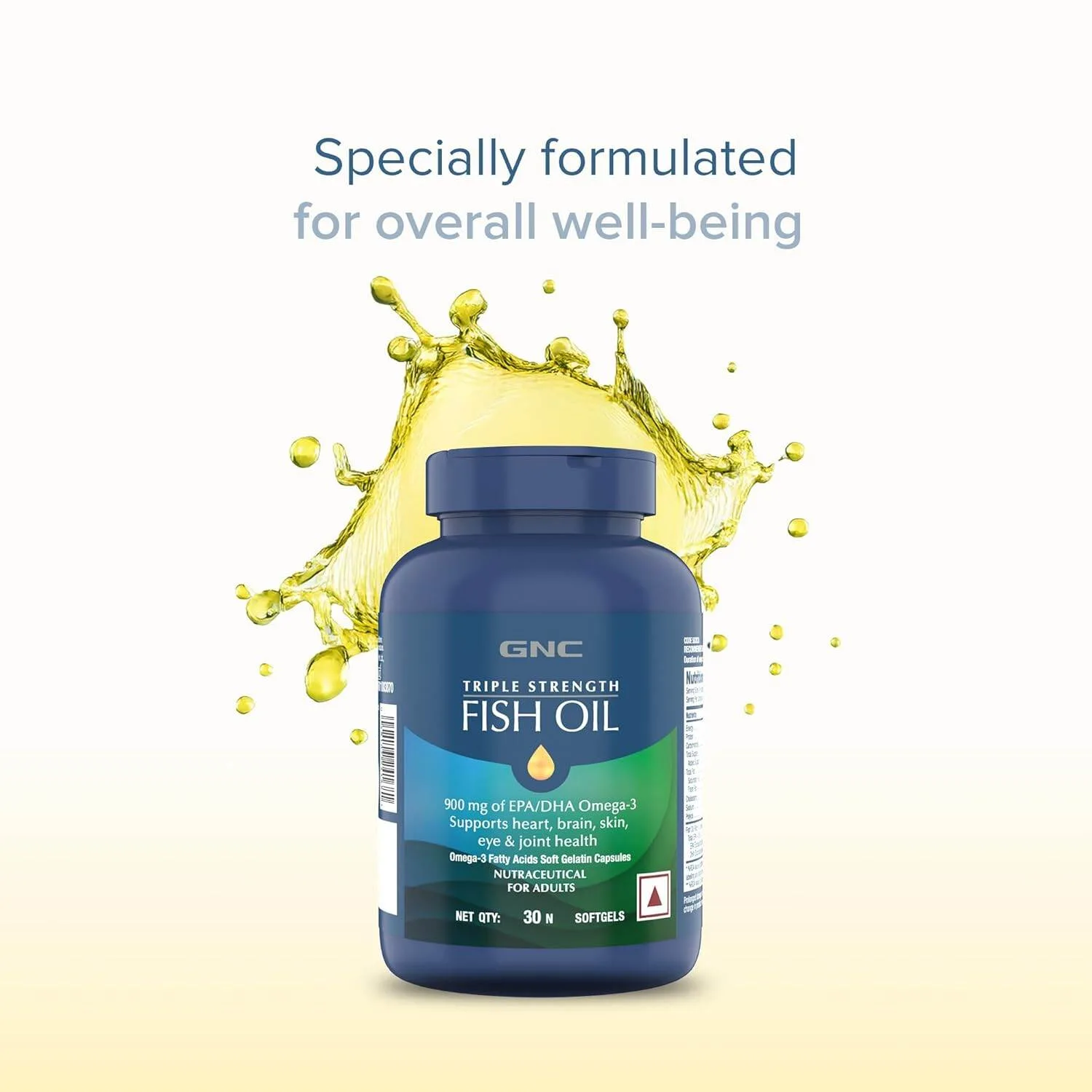
GNC Triple Strength Fish Oil is a high-strength omega-3 softgel in a bottle of 30. One softgel is the serving and the daily amount, so the bottle lasts one month. Each softgel holds 1,500mg of fish oil providing 900mg of EPA and DHA together — 540mg EPA and 360mg DHA, according to the nutrition panel in the product photos.
This is GNC’s Indian pack. The label says it is marketed by Guardian Healthcare Services Pvt. Ltd., Mumbai, under licence from GNC Holdings, LLC, and manufactured by Maxcure Nutravedics Limited, Haridwar, Uttarakhand, India, with FSSAI licence numbers printed. The listing’s “USA formulated” describes the formula; the softgels are made in India. The bottle is labelled a nutraceutical for adults.
Key Benefits
- 900mg of EPA and DHA in a single softgel — roughly three times what a standard 1,000mg fish oil softgel gives, which is where “triple strength” comes from.
- Enteric coating — the softgel is coated to pass through the stomach and open in the intestine, which reduces fishy burps for many people.
- Triglycerides — the best-established effect of omega-3, although the amounts used for that (2-4g a day) are higher than one softgel and are taken under a doctor.
- DHA is a structural part of the brain and eyes. That does not mean extra DHA improves focus or vision in healthy adults.
Key Features
- 1,500mg fish oil per softgel; 900mg EPA + DHA (540mg EPA, 360mg DHA)
- Enteric-coated gelatin softgel
- One softgel a day with food; 30 softgels
- Made in India for GNC under licence; FSSAI licensed
- For adults
Ingredients / Specifications
Per serving of one softgel (about 2.1g), from the nutritional information panel in the product photos:
- Energy 16.49 kcal; protein 0g; carbohydrate 0.65g; total sugars 0g; total fat 1.48g, of which saturated 0.32g and trans 0g; cholesterol 5.16mg; sodium 0mg; polyols 0.29g
- Fish oil, rich in omega-3 fatty acids 1,500mg, with total EPA + DHA 900mg: EPA 540mg, DHA 360mg
Ingredients (only partly legible in the photo): fish oil in an enteric-coated softgel — the coating uses methacrylic acid — with food-grade gelatin, water, a humectant, a stabiliser (INS 1505) and artificial flavouring. Allergen: contains fish. The label also notes that polyols may have a laxative effect.
Where the Photos and the Label Disagree
- One of the seller’s photos says “EPA 900mg, DHA 900mg”. That would be 1,800mg of omega-3 inside 1,500mg of oil, which is impossible. The bottle label gives 900mg in total — 540mg EPA plus 360mg DHA. Go by the label.
- Another of the seller’s photos carries a “100% Safe & Effective” badge, and the listing says the softgels “eliminate” aftertaste and calls it a “3X super-absorbable formula”. No supplement can honestly promise the first; enteric coating reduces fishy burps rather than ending them; and the bottle makes no absorption claim.
- Heart, cholesterol, joints, focus and vision — eating oily fish is linked with better heart health, but fish oil capsules have given mixed results in large trials, and effects on joints, focus and vision in healthy people are modest or not established.
How to Use
- Take one softgel a day with food, as the label directs. Do not exceed that.
- Swallow it whole. The label says not to crush or press the softgel — that damages the enteric coating.
- Do not combine it with another fish oil or cod liver oil without adding up the totals.
Who Is It Suitable For?
Adults who eat little oily fish and want a high-strength omega-3 in one softgel a day.
- Not for anyone with a fish allergy.
- Not vegetarian — fish oil in a gelatin softgel.
- Pregnancy, breastfeeding, any medicine or medical condition — the label says consult your physician first.
- Not for children; the label says it is for adults.
Why Choose GNC Triple Strength Fish Oil?
A lot of omega-3 in one enteric-coated softgel a day, with EPA and DHA printed separately on the label and a named manufacturer and licence holder. Read the label figures rather than the promotional pictures.
Important — Bleeding Risk
Omega-3 oils thin the blood slightly. That is usually harmless on its own, but it matters if you are also taking something that does the same thing.
- Do not take it alongside warfarin, aspirin, clopidogrel or any other blood thinner without asking your doctor. The effects add up.
- Tell your surgeon or dentist that you take it, and expect to be asked to stop about two weeks before any operation.
- Stop and get medical advice if you notice unusual bruising, nosebleeds, or bleeding that takes longer than normal to stop.
Fish Allergy
This is made from fish oil. If you are allergic to fish, do not take it. Get urgent help if you develop swelling, a spreading rash or difficulty breathing after taking it.
This Is a Supplement, Not a Medicine
A dietary supplement is a food product. It is not a medicine, it has not been through the testing a medicine goes through, and it does not diagnose, treat, cure or prevent any disease.
Supplement labels use health language — “supports”, “helps maintain”, “promotes” — precisely because they are not permitted to claim treatment. Read them that way. If a listing anywhere promises that a capsule will fix a medical condition, that promise is not one the product can keep.
What a supplement can honestly do is fill a gap in your diet. That is worth something, and it is a smaller thing than most packaging implies.
Talk to a Doctor First
Speak to a doctor or pharmacist before you start, particularly if you:
- take any prescribed medicine — supplements interfere with medicines more often than people expect
- are being treated for a heart, liver, kidney, thyroid or blood condition
- have diabetes
- are pregnant, trying to conceive, or breastfeeding
- have surgery or a dental procedure coming up
Never stop or reduce a prescribed medicine in order to take a supplement instead. That is the single most dangerous thing anyone does with a product like this, and it is what the marketing language quietly invites.
About the Imported Pack
This is an imported product. The label, the dose instructions and the ingredient panel are the ones printed for the market it was made for, and the wording may differ from a locally packaged version.
Follow the dose printed on the pack itself — it is the authority on its own contents — and check the expiry date when it arrives. If anything on the label is unclear, message us before you take it and we will read it to you.
Storage
- Keep the container tightly closed, somewhere cool and dry, out of direct sunlight.
- Do not store it in a bathroom. Heat and humidity break supplements down faster than anything else, and a Dhaka bathroom is the worst place in the house for them.
- Leave the desiccant sachet in the bottle. It is there to keep moisture out, not by mistake.
- Softgels and fish oils are best kept in a fridge in hot weather — they go rancid otherwise.
- Keep it out of reach of children.
- Do not use it after the expiry date, and throw it away if the capsules smell strongly off, have stuck together or changed colour.
Frequently Asked Questions
Is it 900mg of EPA and 900mg of DHA?
No. It is 900mg of EPA and DHA combined — 540mg EPA and 360mg DHA — in 1,500mg of fish oil. One promotional picture gets this wrong; the bottle label is correct.
Is it made in the USA?
No. It is GNC’s Indian product, made in Haridwar, India, under licence from GNC. The formula is described as US-formulated.
Why only 30 softgels?
One softgel is a full day’s serving, so 30 is a month.
Should I take it with food?
Follow the pack. As a general rule, fat-soluble vitamins (A, D, E, K) and oils absorb better with a meal that contains some fat, and they are gentler on the stomach that way.
How do I check the pack is in date?
The expiry date is printed on the bottle or the base of the box. Check it as soon as your order arrives. If it is unreadable or close to expiry, message us and we will replace it.








Reviews
There are no reviews yet.